
Uncovered pain points and opportunities to improve the onboarding process through user interviews, journey maps and continuous usability testing.
Background
The transcription onboarding had gone through an overhaul before the start of this project, and it was currently in beta. The goal of the redesign was to make the onboarding more comprehensive and to increase the quality of transcribers entering the marketplace.
Before a full release, I was tasked with performing user research to uncover any pain points and potential opportunities to improve the onboarding process.
Research Goals
Along with increasing the quality of transcribers entering the marketplace, the redesign had the goal of increasing transcriber confidence and onboarding graduation rates.

Current State
The transcription onboarding has two parts. The first part includes styling rules and tips, and the second one includes real editing to test the user’s skills and understanding of the content.

Role and Collaboration
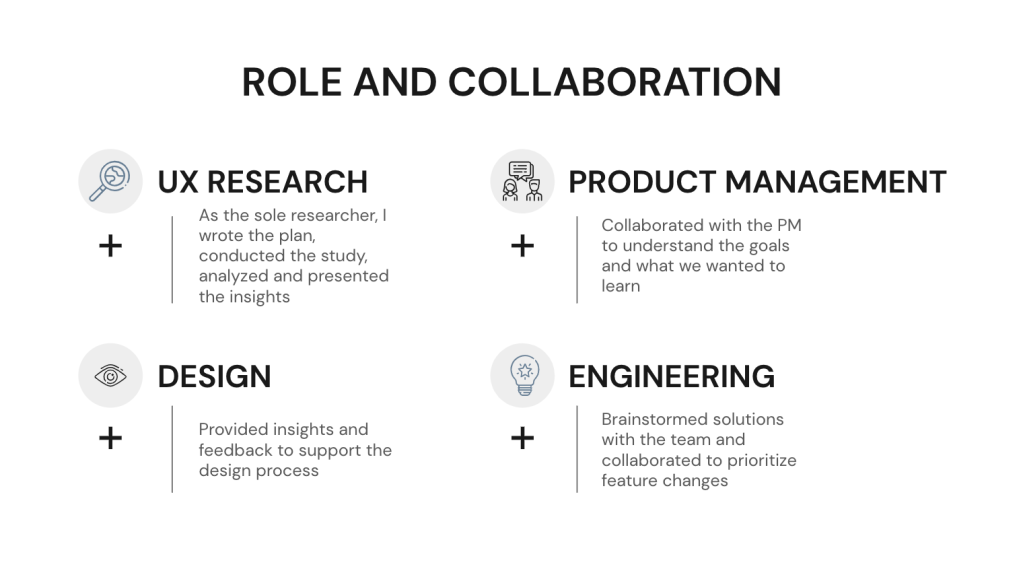
As the sole researcher on the project I led the research, but also collaborated with Product Management and Engineering.
Research Methods
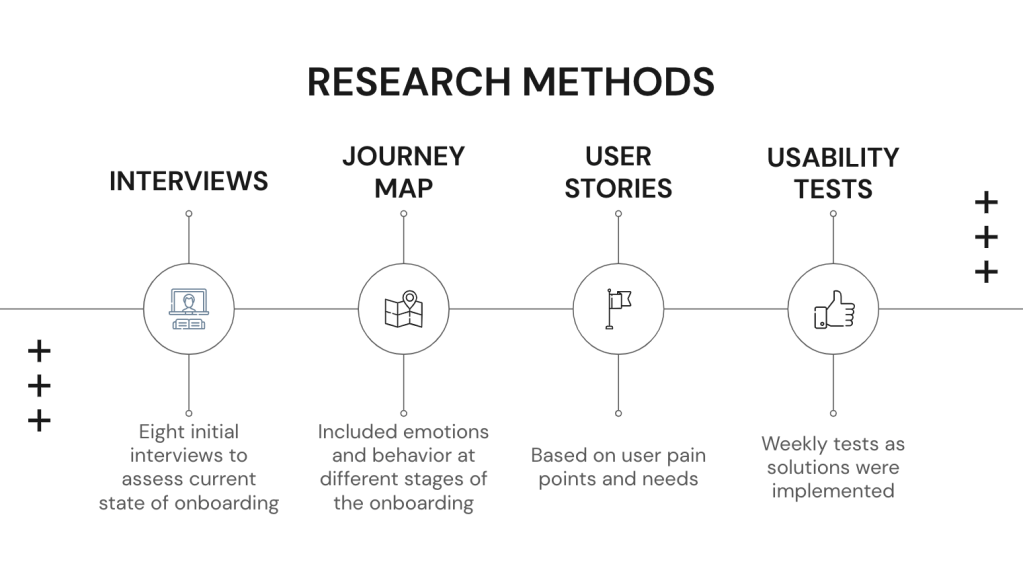
The project included two parts. First, I assessed the current state of the redesign, and from those insights, I was able to provide recommendations. Second, I collaborated with Product Management and Engineering to formulate solutions through twice-weekly brainstorming sessions, which I tested weekly with new users until all the pain points were resolved.
Timeline
The first part of the project took roughly a month while testing solutions and iterating took about two months.

Recruitment
Because I wanted participants to have context, I recruited from our own transcription applicants and had them use test accounts so their own qualification process would not be affected by the user testing.

Sample Questions
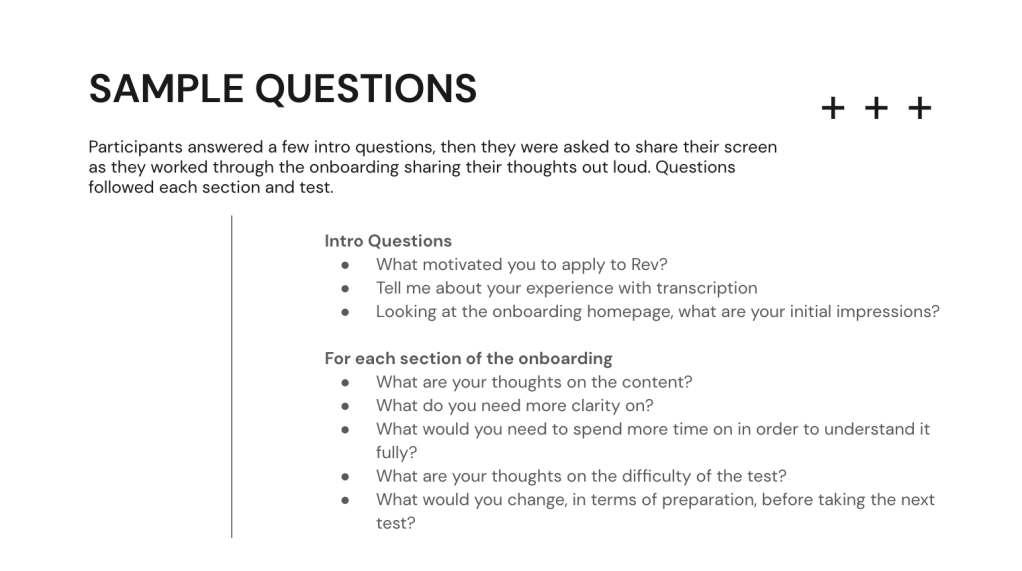
During the interviews, users moved at their own pace through the onboarding, reading, and completing of the tests. I asked participants to share their thoughts out loud and asked questions at the end of each section.
Analysis and Synthesis
Interviews were transcribed and tagged on EnjoyHQ. The affinity map and journey map were created on Miro from tagged insights.

Main Insights
While most users were happily surprised that there was so much content and preparation to take the tests and that the tests allowed them to learn how to use the platform, I was able to identify some key pain points related to almost every area of the onboarding.

Outputs and Deliverables
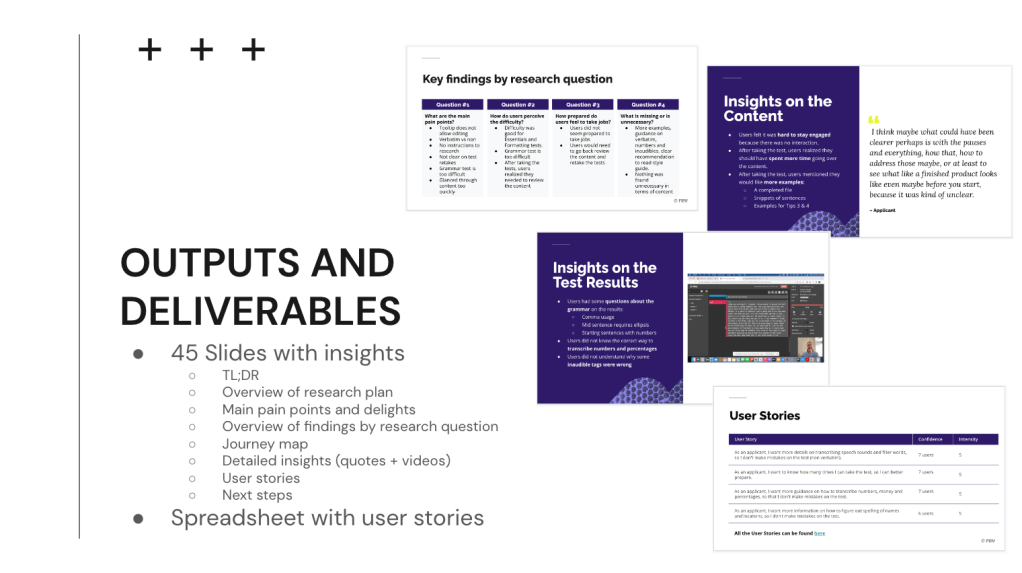
I created slides with all the data and presented them to Product Management, Engineering, and Operations. Slides included all the insights by section of the onboarding, clips from interviews, the journey map, and user stories. A spreadsheet was also created to track and prioritize user stories.
UI/UX Impact
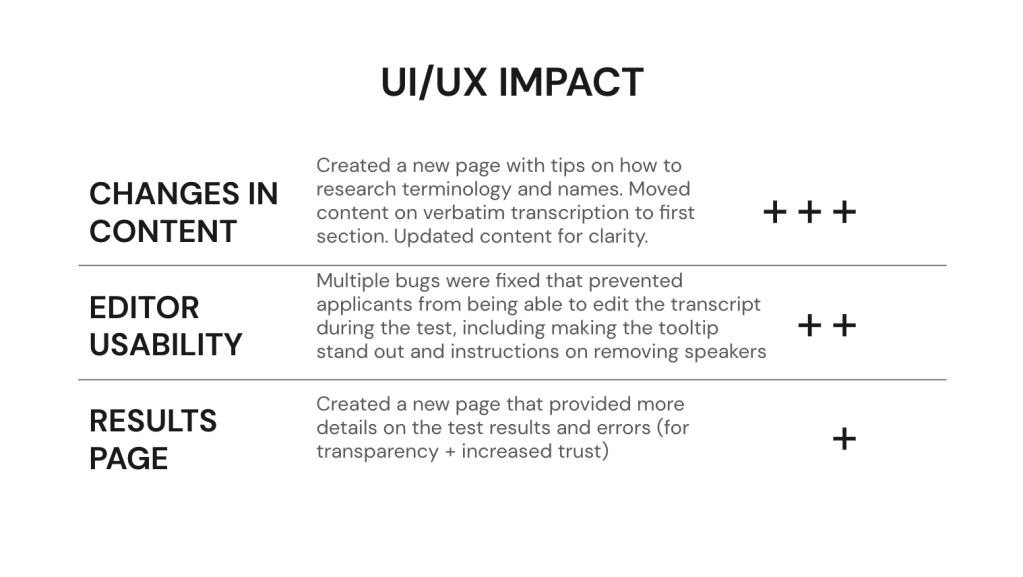
After the insights were presented, I worked with engineering to create solutions. We had brainstorming sessions twice a week, and I tested new iterations with users weekly. I shared the results of these tests with the team, and from there we either kept working toward a new solution or moved to the next user story.
Big Picture Impact
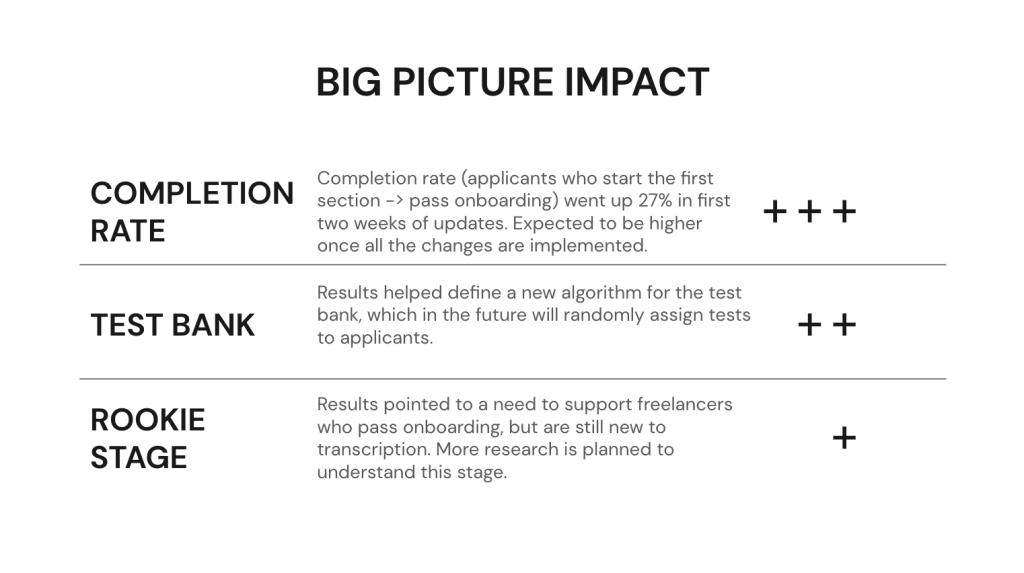
Overall, the graduation rate was improved after implementing the updates, and we were able to get more data to help us prioritize new projects related to onboarding.
Next Steps
Quantitative research is planned to understand satisfaction once more users go through the redesigned onboarding, which can help us validate qualitative results from this project.

Reflection
Through this project, I was able to improve my skills in a few areas, plus collaborate and improve processes with other teams.

 Lucia Mata, MS